
Tips for MCing a Wedding as a Family Member or Friend
So, you’ve been asked to MC a wedding.
Firstly, congratulations. It usually means the couple trusts you, knows you can handle a microphone, and thinks you’re the right person to help guide one of the biggest nights of their lives.
No pressure.
The good news is that being a great wedding MC doesn’t mean you need to be a comedian, professional presenter or the loudest person in the room. Your main job is much simpler:
Keep the night moving, make everyone feel comfortable and make sure guests know what’s happening next.
If you’re MCing a wedding for a family member or friend, here are our biggest tips:
Know What You’re In For

Photo by Mitch and Tijana. Please do not reproduce without permission.
Understand Your Role Before the Wedding
One of the biggest mistakes first-time MCs make is assuming their job is just to introduce the speeches.
There’s usually a little more to it.
Depending on the wedding, you may need to:
– Welcome guests into the reception
– Introduce the bridal party or newlyweds
– Explain housekeeping information
– Introduce speeches
– Announce dinner or food service
– Let guests know when the bar, photo booth or other activities are available
– Introduce the cake cutting
– Introduce the first dance
– Invite guests onto the dance floor
– Make any last-minute announcements throughout the evening
Speak with the couple before the wedding and get a clear idea of exactly what they expect from you.
If there’s a wedding coordinator, venue manager or DJ involved, introduce yourself to them before the reception starts too. You’ll probably be working together throughout the night.
Get your hands on the Run Sheet
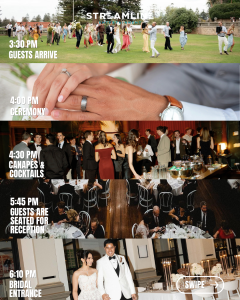
Photography by Ricky Gestro, Samantha Gades, Diego Nieto, White Events, and Holii & Ash. Please do not reproduce without permission.
Get a Proper Run Sheet
Do not try to wing an entire wedding reception.
Ask the couple for the final wedding run sheet and keep a copy with you.
It should include things like:
– Bridal party entrance
– Meal service
– Speeches
– Cake cutting
– First dance
– Parent dances
– Dance floor opening
– Any special performances or surprises
– Finish time
Timing can change throughout the evening, so don’t become too attached to the exact minute listed on the run sheet.
Think of it as a guide rather than a train timetable.
A good MC works with the venue, coordinator and DJ to make sure everyone is ready before announcing the next moment.
Be Flexible
Wedding timelines almost never run exactly to schedule.
Dinner might take an extra 15 minutes. A speech might go longer than expected. The photographer might want another five minutes outside at sunset. Someone important might temporarily disappear.
That’s completely normal.
Your job isn’t to force the wedding back onto schedule at all costs. Your job is to work with the venue, DJ and other suppliers to keep everything flowing naturally.
Get to know your DJ
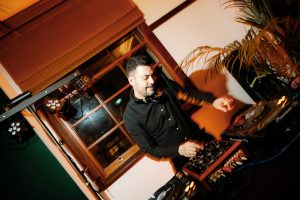
Photo by Diego Nieto Photography. Please do not reproduce without permission.
Meet the DJ Before the Reception Starts
Your DJ is going to be one of your most important teammates during the reception.
Before guests enter, have a quick conversation with them about:
– Where the microphone is
– Who is controlling the music during entrances
– How speeches will work
– Music cues for important moments
– First dance timing
– When the dance floor is scheduled to open
Most experienced wedding DJs have been through hundreds of receptions and can also help keep you on track if something changes.
If you’re ever unsure whether you’re ready to announce the next part of the night, check with the DJ or wedding coordinator first.
After Meeting with Your DJ: Getting the Room Involved
Once you’ve discussed the timing and music cues, think about how you’ll get guests involved in the big moments.
Get the Room Ready Before You Introduce the Bridal Party
The bridal party entrance is one of the first big energy moments of the reception.
Don’t go from a room full of guests chatting quietly straight into introducing the bridal party. Warm the room up first.
A simple way to do this is to get both sides of the room involved.
For example:
“Before we welcome in the bridal party, I want to get a quick indication of where everyone in the room is from.”
“If you’re from the bride’s side of the family, part of her friend group, or you knew her first, let’s hear you make as much noise as possible in 3… 2… 1!”
Let the room react.
Then:
“Alright, not bad. Now, if you’re from the groom’s side of the family, part of his friend group, or you knew him first, let’s hear you in 3… 2… 1!”
From there, have a bit of fun with whichever side was louder.
“I think the groom’s side might have you covered tonight!”
Then bring the energy up again:
“But we’re going to need at least double that energy now. Please stand as we welcome in the bridal party!”
You can then introduce the bridal party all together:
“Make some noise for [NAME], [NAME], [NAME] and [NAME]!”
Or introduce them in pairs if that’s how the entrance has been planned.
The important thing is that by the time the first person walks into the room, the guests are already engaged and ready to cheer.
Bring Some Energy When It Matters
While you don’t need to be overly enthusiastic all night, there are a few moments when your energy can completely change the atmosphere.
The bridal party entrance is one. Opening the dance floor is another.
When you introduce the first dance or invite everyone onto the dance floor, do it with some enthusiasm.
Instead of quietly saying:
“I think everyone can join them now…”
Give people a reason to move. Try something like:
“Ladies and gentlemen, the dance floor is officially open. Come and join our newlyweds!”
Then let the DJ take over.
Keep everyone in the loop

Photo by James Simmons Photography. Please do not reproduce without permission.
Give the room a Five-Minute Warning Before Formalities
One of the easiest ways to keep a wedding running smoothly is to let everyone know what’s coming up.
Around five minutes before a block of formalities, jump on the microphone and give the room a quick heads-up.
For example:
“Ladies and gentlemen, just a quick heads-up that in around five minutes we’ll be moving into speeches, so now’s a great time to grab a drink or make a quick bathroom stop before we get started.”
This gives guests time to settle back into their seats and helps avoid people getting up halfway through a speech, cake cutting or first dance.
It also gives you a few minutes to make sure everyone involved in the next part of the evening is ready.
Check with Every Speaker Before You Start the Speech Block
Never assume someone is ready to give their speech just because the run sheet says they’re next.
Before starting a block of speeches, find each person who is due to speak and make sure they:
– Know they’re coming up
– Are actually in the room
– Have their speech ready
– Are comfortable with the running order
It’s also worth giving each speaker another quick heads-up shortly before they’re due to go.
Something as simple as “You’re up straight after this speech” can make the whole process much smoother.
The last thing you want to do is announce someone onto the microphone while they’re outside, at the bar or halfway through the bathroom queue.
Don’t Announce Something Until Everyone Is Ready
This is one of the most important tips, and it applies to more than just speeches.
Before announcing something like the cake cutting, first dance or speeches, make sure:
– The photographer is ready
– The videographer is ready
– The couple is ready
– The venue is ready
– The DJ has the correct music ready
– Anyone involved in the formalities knows what is happening
There’s nothing worse than announcing:
“Please welcome the newlyweds to the dance floor for their first dance!”
…only to discover the groom is in the bathroom and the photographer is outside.
A quick check beforehand prevents awkward moments.
Keep it Short & Simple
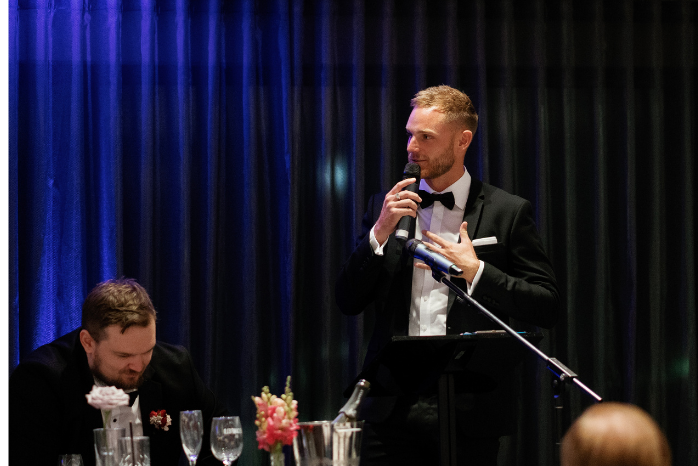
Photo by At last co Photography. Please do not reproduce without permission.
Keep Your Announcements Short
You don’t need to give a speech every time you pick up the microphone.
Short, clear announcements usually work best.
Instead of:
“Ladies and gentlemen, if I could please have everybody’s attention for a moment because we are shortly going to be moving into the next part of this evening…”
You can simply say:
“Ladies and gentlemen, could I please have your attention as we welcome our first speaker for the evening…”
Say what needs to be said, then move on.
The less you ramble, the more attention guests will give you when you actually need it.
Know How to Get the Room’s Attention
Even a short, clear announcement can get lost in a noisy room. Before you begin, give guests a moment to realise something is happening.
Don’t start your important announcement while half the room is still talking. Give guests a moment to realise something is happening.
Start with something as simple as:
“Ladies and gentlemen, could I please have your attention?”
Pause. Wait until the room settles. Then continue.
Don’t feel pressured to fill the silence or keep talking over everyone. Being comfortable with a few seconds of quiet helps you sound confident and gives guests time to listen.
Hold the Microphone Close to Your Chin
Once you have everyone’s attention, make sure they can hear you.
One of the most common problems we see with first-time MCs is holding the microphone too far away from their mouth.
A good rule is to rest the microphone against the front of your chin.
Yes, actually touching your chin.
That keeps the microphone close enough for your voice to come through clearly without the sound technician or DJ having to turn the microphone up excessively.
If you hold the microphone down near your chest, the volume has to be pushed much harder to compensate. This can increase the chance of feedback and still make you difficult for guests to hear.
Keep the microphone against or very close to your chin, speak clearly and keep it in the same position while you talk. Don’t turn your head away from the microphone halfway through a sentence.
It might feel unusually close if you’re not used to speaking into a microphone, but it will sound much better throughout the room.
Be prepared, but be yourself

Photo by Jack in a Box. Please do not reproduce without permission.
Learn Everyone’s Names and How to Pronounce Them
Before the wedding, confirm the names of:
– The wedding party
– Parents
– Speech-givers
– Anyone being introduced
– Performers or special guests
Most importantly, make sure you know how to pronounce them.
If you’re unsure, ask.
It is much better to check beforehand than confidently introduce someone’s new father-in-law with completely the wrong surname.
Don’t Turn It into Your Comedy Show
A little humour is great.
In fact, having a friend or family member MC often works so well because they know the couple personally and can make the evening feel relaxed.
But remember: you’re hosting the wedding, not performing a 20-minute comedy set.
Avoid jokes that:
– Embarrass the couple
– Reference ex-partners
– Tell overly personal stories
– Only make sense to three people in the room
– Could offend family members
– Involve stories the couple clearly wouldn’t want shared publicly
If you’re wondering whether a joke might be inappropriate, that’s normally a good sign to leave it out.
Don’t Drink Too Much Before Your Job Is Done
You absolutely don’t have to remain stone-cold sober all night.
But remember that you’re effectively working until the formalities are finished.
We’ve all seen the wedding MC who was confident at 6:00pm and suddenly delivering an unplanned 15-minute speech at 9:00pm.
Have a drink, enjoy yourself, but stay composed until you’ve finished your MC duties.
Once the dance floor is open and the microphone has been handed back to the DJ?
Different story.
Have Your Notes, but Don’t Read a Script Word-for-Word
Having notes is a great idea.
Reading every single sentence from your phone isn’t. Please don’t use your phone; it takes away the specialness of the occasion.
Instead, print out the following:
– Names
– Important announcements
– The running order
– Any essential information
– Your introductions
Then speak naturally.
You’re a friend or family member, and that’s exactly why you’ve been chosen. You don’t need to suddenly sound like a television presenter.
The Golden Rule: You’re There to Help the Couple Enjoy Their Wedding

Photo by Moments by Naz. Please do not reproduce without permission.
At the end of the day, you’re there to help the couple enjoy their wedding.
A great wedding MC rarely feels like the centre of attention. Instead, they quietly keep everything moving while creating energy when the moment calls for it.
If you can:
– Keep announcements clear
– Give guests plenty of warning before formalities
– Check that speakers are ready
– Follow the run sheet
– Communicate with the suppliers
– Stay reasonably sober
– Know everyone’s names
– Bring the energy when it matters
– Keep things moving
…you’re already well on your way to being a great wedding MC.
And remember, you don’t have to do everything yourself.
A good wedding DJ, venue coordinator and wedding planner will generally be more than happy to help guide you through the night.
At Streamline Entertainment, our wedding DJs work alongside MCs every weekend, helping coordinate entrances, speeches, music cues, first dances and dance floor openings so the reception runs smoothly from start to finish.
So if you’ve been handed the microphone for your best friend’s or family member’s wedding, don’t stress.
Prepare properly, keep things simple and enjoy being part of the day.
