
What Does a Wedding DJ Do? Everything You Need to Know
What does a wedding DJ really do on the night? Far more than play music. A professional Perth wedding DJ manages ceremony audio, cues key formalities, reads the crowd, coordinates with vendors and keeps your run sheet on track, making the entire celebration feel effortless.
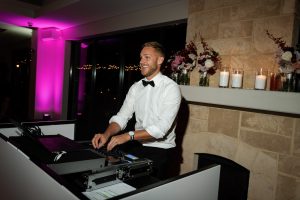
Photo by Jase (@_atlastco_ photography). Please do not reproduce without permission.
The distinction matters because, without understanding the full scope of the role, couples can easily make booking decisions based on price alone, only to find that the night feels disjointed. That’s one reason many couples choose to book through a full-service entertainment agency like Streamline Entertainment. Rather than relying on a highlight reel or a few online reviews, every DJ has already been vetted for their ability to manage the technical, logistical, and crowd reading aspects of a wedding, not just the music. After all, playing the right song is only one part of what makes a reception flow seamlessly. Here’s exactly what your DJ should be doing from the moment they arrive through to the final send-off.
What does a wedding DJ do before a single song plays?
A professional wedding DJ arrives well ahead of guests, often an hour or more, depending on the venue and complexity of the setup. That time is spent positioning speakers, running cables, testing microphone levels, and conducting a proper soundcheck for the room. This is not optional housekeeping. Distorted audio during vows or a microphone that cuts out mid-speech are the kinds of things guests remember for the wrong reasons, and they are entirely preventable with a thorough pre-ceremony check.
Ceremony cueing is one of the most technically precise parts of the entire night. The DJ watches for the officiant’s signal, fades in the processional track at exactly the right moment, and holds it for the correct duration. The recessional needs to match the emotional energy of the exit, which means both timing and track selection are critical calls. Getting either wrong is visible to every person in the room.
For around 30 to 45 minutes before the ceremony begins, the DJ sets the atmosphere with background music that is welcoming but not distracting. This is your first opportunity to shape the mood of the entire event. A good DJ treats this window as intentional programming, not dead time to fill while they finish setting up.
Cocktail hour: atmosphere management and the first real crowd read
If your cocktail hour is in a separate space from the ceremony or reception, your DJ manages a second audio setup to fill that room appropriately. It’s a logistical step many couples don’t realise is part of the job until they’re standing in a silent atrium wondering why no one has pressed play. More importantly, the cocktail hour is where an experienced DJ starts forming a picture of the room. Are guests gravitating toward the dance floor before it opens? Are they chatting quietly over background music, or calling out requests? This early read directly informs how the DJ programs the reception once dancing begins.
A DJ who ignores this window and sticks rigidly to a pre-set playlist will often misjudge the energy later in the night, and recovering that momentum is rarely straightforward. Toward the end of cocktail hour, the DJ makes directional announcements to move guests into the reception space. It sounds minor, but clean transitions at this point keep the timeline intact and reduce the risk of the grand entrance being delayed because half the room is still at the bar. This is where a DJ’s role as crowd manager becomes just as important as their role as music curator.
What does a wedding DJ do during the reception?
The grand entrance sets the tone for the entire reception, and the DJ controls that moment completely through music selection and microphone timing.
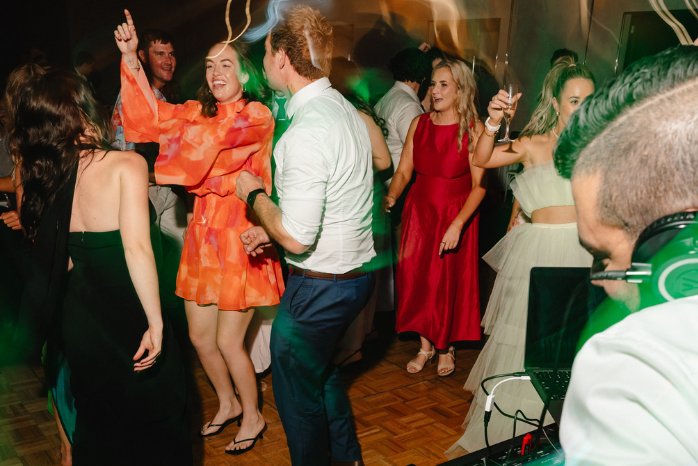
Photo by Bayley William (@bayleywilliam.weddings). Please do not reproduce without permission.
From there, the first dance typically follows within minutes, capturing the emotional peak while guests are still fully attentive and before the evening settles into dinner service. A standard six-hour reception timeline looks like this:
5:00 PM:
Guest arrival and pre-ceremony music
5:30 PM:
Ceremony begins
6:00 PM:
Cocktail hour
7:00 PM:
Guests seated for reception
7:10 PM:
Grand entrance
7:15 PM:
First dance
7:20 PM:
Welcome speeches, round one (approximately 10 minutes)
7:30 PM:
Dinner service with background music
8:30 PM:
Second speech round, if applicable
8:45 PM:
Cake cutting
8:50 PM:
Parent dances
9:00 PM:
Open dancing begins
11:00 PM:
Final song and send-off
The DJ actively manages every transition in that schedule, not just the music that fills the gaps. Once open dancing begins, crowd-reading takes over entirely. A professional DJ watches who is on the floor, what clears it, and what brings people back. They adjust tempo, genre, and energy in real time, sometimes making calls within seconds based on what they see in front of them.
Speeches and the first dance
Speeches are one of the most common sources of timeline blowout at receptions. A professional DJ/MC sets expectations with speakers before the event, monitors timing during delivery, and handles the handoff cleanly so the night doesn’t stall. The first dance, meanwhile, demands precise reading of the room, launching it too early or too late can deflate a moment that should be a genuine highlight.
Open dancing
Once the floor opens, the DJ’s crowd-reading becomes the engine of the night. Genre shifts, tempo adjustments, and reading requests against what the room actually needs in the moment, these are the real-time decisions that separate a DJ who keeps a floor packed from one who empties it by 9:30 PM.
When your Wedding DJ is also your MC
Acting as MC means your DJ guides the entire room through the night: calling guests to dinner, introducing the bridal party, prompting the crowd for the bouquet toss, and announcing last drinks.

Photo by Jack in the Box Perth (@jackintheboxperth). Please do not reproduce without permission.
Without a capable MC running these moments, they lose their impact or catch guests off guard entirely. Microphone timing and MC skill strongly influence how a grand entrance lands, it’s a skill that deserves as much scrutiny during the booking process as music taste. They also coordinate with the photographer and videographer to ensure every key moment is captured without having to double back and recreate it.
The DJ is typically the most visible vendor in the room and the one guests look to for direction. That makes them a natural hub for on-the-night coordination. Before the cake cut, they signal the photographer. Before calling guests to dinner, they check in with the caterer. If noise curfews or room logistics shift mid-reception, they liaise with venue staff to keep things moving. This vendor coordination role is rarely discussed during the booking process, but it is one of the most valuable things a skilled DJ brings to the night.
Equipment, lighting and what a professional package typically covers
A professional wedding DJ brings powered speakers scaled to the room size, a multi-channel mixer to handle music and microphone inputs simultaneously, and at least one wireless microphone for speeches and announcements. Backup gear should be standard, not optional. A second laptop with all music preloaded and a wired microphone as a failsafe are non-negotiable at a professional level.

Photo by Kenny Ngoo (@kennyngooweddings). Please do not reproduce without permission.
Most mid-range packages include a dance floor lighting rig positioned behind the DJ setup. Upgraded packages offer party lighting or wash lighting for a more dramatic visual effect. Couples should confirm exactly what is included in the quoted price rather than assuming lighting is bundled in, because it frequently isn’t at the lower end of the market.
What to ask before you book and why the agency model matters
Before signing anything, ask these questions directly: Will the DJ named in the contract actually perform at your wedding, or is substitution possible? Have they worked at your venue before? How do they handle do-not-play lists and real-time guest requests? What backup equipment do they carry? What happens if they need to cancel? These questions separate experienced, prepared DJs from everyone else. The answers reveal more than any Instagram reel or review ever will.
Your contract must specify the exact DJ by name, total service hours, arrival and departure times, payment schedule, overtime rates, cancellation policy with refund terms, equipment list, and a clause confirming liability insurance. Booking any DJ without a written contract covering these terms is a risk strongly advisable to avoid, regardless of how impressive their demo mix sounds.
A full-service entertainment agency such as Streamline Entertainment ensures that every DJ on its roster has already been vetted and can walk into your wedding with genuine, proven experience across a wide range of venue types, room sizes and crowd demographics. That level of consistency can be difficult to replicate when searching online for an independent DJ and hoping their highlight reel accurately reflects how they perform under pressure throughout a six-hour run sheet.
What to take away before you book
A wedding DJ is not a human jukebox. From soundcheck to the final send-off song, they are managing audio, cueing formalities, reading the crowd, directing guests, coordinating vendors, and keeping a complex timeline on track simultaneously. Understanding what a wedding DJ does, the full scope of it, changes how couples evaluate their options and what they demand from a brief.
The difference between a night that flows and one that stalls often comes down to whether the DJ was trained across all of these responsibilities or simply hired to fill a timeslot. Use the checklists and the questions in this guide before you commit to anything. Confirm every detail in writing. Prioritise DJs or agencies with verifiable experience across the full scope of what the role demands. That’s what makes the night feel effortless when you’re actually living it.
When you’re ready to confirm your date, contact Streamline Entertainment to discuss your event, get a personalised quote, and lock in a DJ who knows exactly what the job requires.
